NEWS /
Insights
Building the Foundations of Trade
.svg)
Marine and Industrial Infrastructure Key to Queensland's Growth
Queensland’s economic momentum has always depended on the infrastructure that connects its regions to global markets. Ports, bridges and coastal assets remain central to that story as the state’s industrial and energy networks continue to grow.
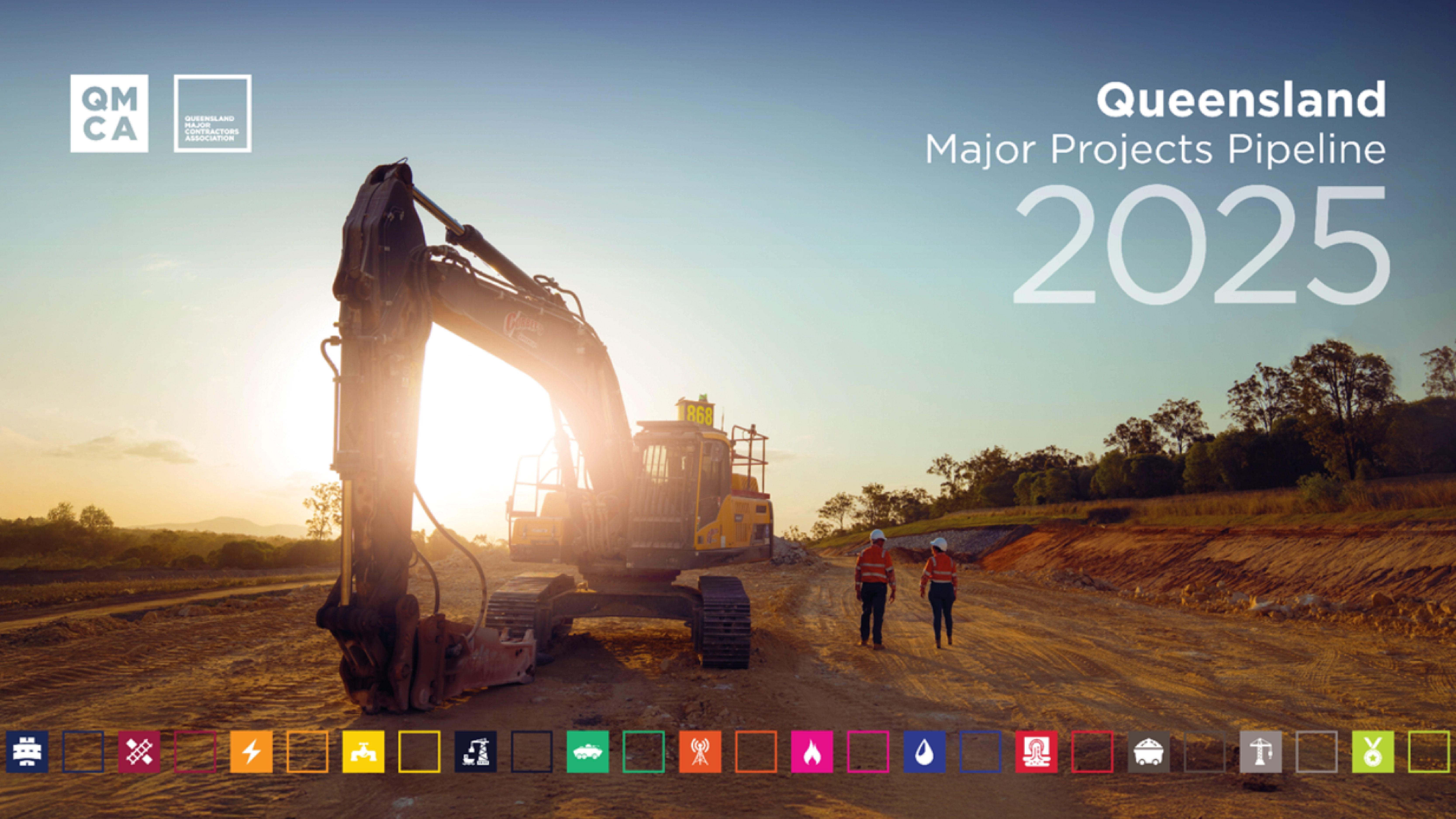
The 2025 Queensland Major Projects Pipeline Report (QMPPR) highlights $127.5 billion in major projects, including increasing investment in export-related and heavy-industry infrastructure, with marine works forming an important part of this broader picture. These projects will shape Queensland’s future capability for decades.
For Lasse Madsen, General Manager of MLEI Group, the findings show both momentum and increasing pressure.
“Queensland is heading into a significant phase of industrial expansion. As the scale grows, so does the pressure on infrastructure. Every wharf, bridge and coastal facility needs to be designed with this in mind if we want this pipeline to be sustainable.”
EXPORT INFRASTRUCTURE ESSENTIAL FOR GROWTH
Ports and Marine Projects at the Core of Queensland’s Economy
From the expansion of Gladstone and Abbot Point ports to new export terminals in the Bowen Basin and North Queensland, marine infrastructure continues to underpin Queensland’s export performance.
While the QMPPR does not define marine infrastructure as a standalone sector, it highlights extensive investment in port upgrades, harbour works, coastal logistics facilities and heavy-industry assets that directly support Queensland’s exports. These developments sit at the centre of the resources supply chain and rely heavily on advanced marine and structural engineering.
More than $20 billion of resources and heavy-industry projects are in planning or development. Many depend on coastal access, port-handling capacity and export staging areas. These assets will underpin growth in critical minerals, hydrogen and new energy markets.

“
Export infrastructure is the quiet achiever of the state’s economy. Every tonne of ore, grain or hydrogen leaving Queensland depends on marine infrastructure that must perform reliably in demanding marine environments.
Madsen emphasises that long-term value comes from engineering choices that prioritise resilience. A design lens that considers the next 40 to 50 years, rather than a short-term funding cycle, strengthens export continuity and reduces lifecycle cost.
Lasse Madsen | General Manager | MLEI Group
Bridging Industry and Infrastructure
The QMPPR also identifies sustained investment in transport linkages, including upgrades to bridges, access routes and river crossings that connect industrial regions to ports and freight corridors.
“Bridges play a vital role in Queensland’s logistics chain,” Madsen says. “They link mines to ports, regional industries to supply chains and workers to employment centres.”
However, delivery pressures continue to intensify. The report forecasts 37% cumulative cost escalation by 2029, driven by steel price volatility, global supply chain stress and competition for critical materials and fabrication capacity.
These same inputs are required across marine structures, heavy industry assets, energy infrastructure, and rail, meaning inflationary pressure is shared across multiple sectors. Madsen says this overlap makes early coordination essential.
“When industry understands where demand will peak, we can plan smarter. Coordinated procurement and adaptable design help reduce cost and keep projects moving.”
Engineering Smarter, Building Leaner
Improving productivity across the unfunded pipeline, valued at $49.4 billion, will be essential to unlocking private investment. Heavy-industry projects account for a significant portion of this total, increasing the need for efficient design and clear constructability.
Madsen believes the most effective savings come from the design phase.
“The strongest returns often come from better engineering. When we optimise form, minimise material use and simplify fabrication, we shorten construction time and reduce cost without compromising durability or safety.”
He sees opportunities for significant gains through modular marine construction, prefabricated bridge components and digital modelling.
“The closer design is aligned to practical delivery, the safer and more efficient the build becomes. Constructability is now a strategic advantage.”
Heavy Industry: The Next Frontier
The QMPPR shows continued momentum in mining and industrial development, with a $3.8 billion increase in projects compared with last year. These projects increasingly blend marine works, processing facilities, transport links and high-voltage energy connections, creating complex, multidisciplinary requirements.
“Industrial projects today involve far more integration,” Madsen says. “Marine structures must align with processing facilities, transport networks and energy systems. That level of complexity makes early engineering involvement essential.”
MLEI’s deep capability across civil, structural, and marine engineering places the firm at the intersection of these challenges, ensuring that complex industrial and export projects begin with clear, robust and buildable solutions.
“Our aim is always to resolve critical engineering issues early. The clearer we are up front, the more certainty we create for the teams delivering these projects.”
Sustainable Growth, Engineered for the Long Term
As Queensland strengthens its position as a global exporter of energy, minerals and manufactured products, the QMPPR reinforces the need for durable, long-term infrastructure planning.
“This pipeline represents a generation of opportunity,” Madsen says. “Queensland’s future success depends not just on how much we build but on the quality of what we deliver. Stronger designs, earlier collaboration and long-term thinking will keep our ports, bridges and industrial assets performing for decades.”
Discover more and download our capability statement

.png)
.png)
.png)